

Walk into any working jeweller's studio, from a small setup in a spare room to a bustling workshop in Birmingham's Jewellery Quarter, and you'll find a mandrel. It's as fundamental as a saw frame or a set of pliers. But the question for someone starting out or expanding their toolkit isn't if you need one, but which one. The primary debate often boils down to this: a smooth, tapered round mandrel or a chunky, stepped one? They look different because they do fundamentally different jobs. Making the right choice first will save you money, frustration, and marked knuckles.
This isn't just about picking a piece of steel. It's about understanding the geometry of your work. The decision in the round vs stepped mandrel debate hinges entirely on what you plan to make most often. As a working jeweller, I've used both extensively and have come to rely on each for their specific strengths. This guide is my bench-tested breakdown of what each tool does best, its limitations, and which one earns its place on your bench first. Our editorial standards mean we only recommend what we'd use ourselves.
The Tapered Round Mandrel: The Workshop Staple
If you can only have one mandrel to start, this is almost certainly it. The tapered round mandrel, often simply called a ring mandrel, is a long, solid cone of hardened steel. It starts at a small diameter (perhaps 11mm) and gradually, seamlessly, increases to a larger one (around 25mm). Its surface is smooth, polished, and ideally, marked with ring sizes.
A good tapered ring mandrel is made from high-carbon tool steel, properly hardened to at least 50 HRC on the Rockwell scale. You'll find plenty of cheap, soft steel versions online, but they are a false economy. The first time you strike a piece of work-hardened silver against one with a steel hammer, you'll dent the mandrel. That dent will then transfer its ugly impression to the inside of every subsequent ring you make on it. A quality mandrel, often made from Sheffield steel, will withstand years of hammering with brass or rawhide mallets and careful tapping with a planishing hammer.
What It's Best For: Sizing and Gentle Forming
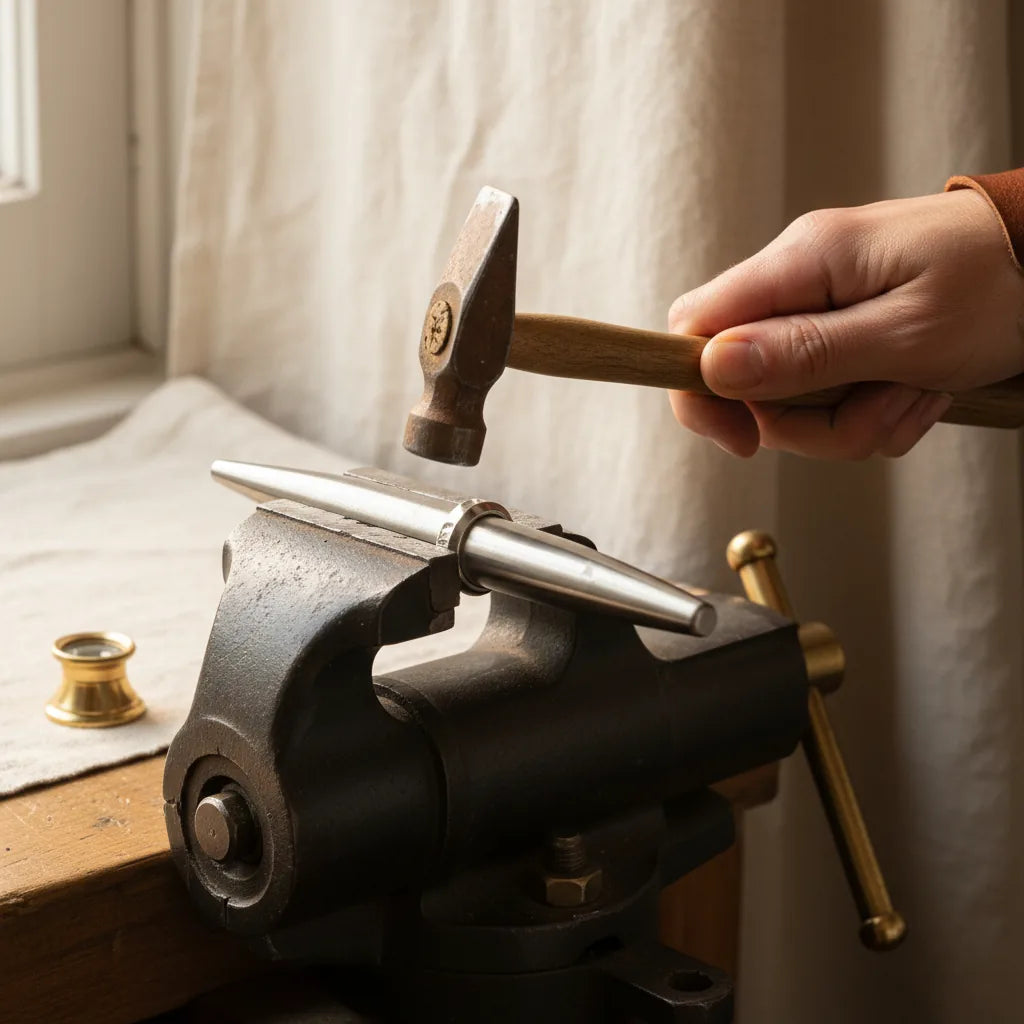
The tapered mandrel's primary, indispensable function is sizing rings. The continuous, gradual taper is its superpower. When a ring is a fraction too small, you can slide it onto the mandrel and gently tap it further down the cone with a rawhide mallet. This pressure evenly expands the metal, increasing its diameter. The laser-etched or engraved size markings (UK A-Z, US 1-15) let you know exactly when you've hit your target. For a detailed look at this process, our guide on how to size and stretch a ring covers the technique in depth.
Its secondary strength is in forming gentle, organic curves. Because the surface is perfectly smooth and continuous, you can form bezels for tapered stones, shape small synclastic forms for earrings, or create conical components without leaving any tool marks. When you're working with soft, fully annealed metal, you can often shape it with just your hands and a mallet, letting the mandrel's perfect curve do the work. It allows for infinite variability; you can achieve any diameter along its length, not just a set of pre-defined sizes.
The Limitations
The very thing that makes the tapered mandrel so versatile—its continuous taper—is also its main limitation. It is not the right tool for creating components with perfectly parallel sides. If you try to form a 20mm wide bangle on it, the edge that sits further up the cone will have a smaller diameter than the edge further down. For a narrow ring band, this difference is negligible. For a wide cuff or a series of identical, fixed-diameter jump rings, it's a critical flaw. You'll spend ages trying to correct the distortion, fighting against the tool's fundamental geometry.
The Stepped Mandrel: Precision in Repetition
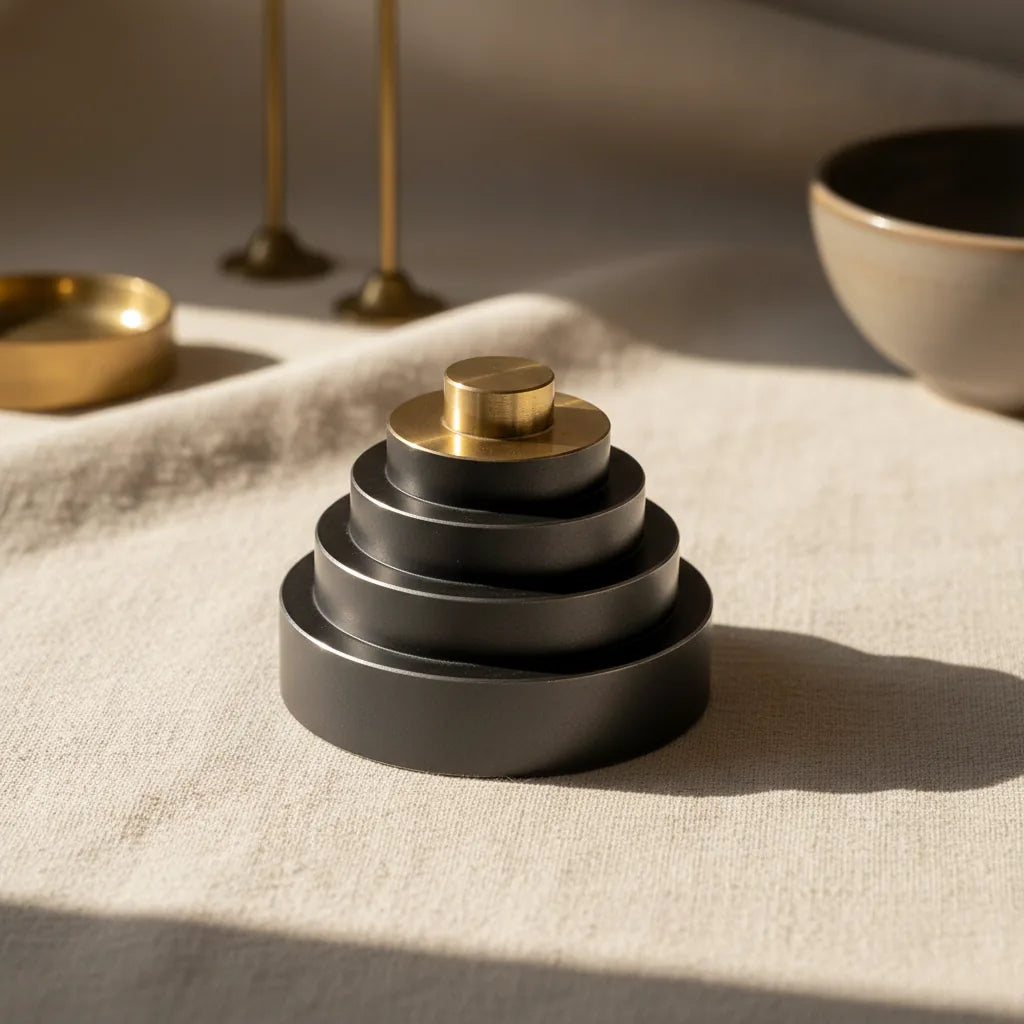
Now we turn to the beast. A stepped mandrel is a different animal altogether. It doesn't have a continuous taper. Instead, it's a solid bar of steel machined into a series of sections, or 'steps'. Each step has its own distinct, consistent diameter with parallel sides. A typical stepped bracelet mandrel might have five or six steps, perhaps starting at 55mm and going up to 80mm in 5mm increments.
Like the tapered mandrel, quality is paramount. It needs to be made from hardened steel with a good surface finish. Because it's often used for forming heavier gauge metal for bangles, it needs to be substantial. A good one will weigh a solid 2-3kg and feel immoveable when held in a vice. The transitions between the steps are often sharp 90-degree angles. On a brand-new mandrel, it’s wise to very gently break these edges with a fine file or some 600-grit abrasive paper to prevent them from cutting into your metal as you form it.
What It's Best For: Bangles and Production Work
The stepped mandrel excels where the tapered one fails. Its core purpose is to create perfectly round, parallel-sided rings and bangles at specific, repeatable diameters. When a client orders a bangle with a 65mm internal diameter, you can form the annealed metal around that exact step. Every strike of the mallet reinforces that perfect curve at that precise size. There's no guesswork.
This makes it an absolute necessity for any production work. If you need to make fifty 12mm round bezels, you find the 12mm step on a smaller stepped ring mandrel and form every single one identically. Making your own jump rings? Wrap your wire around the desired step, saw through the coil, and you have a handful of perfectly uniform rings. It provides a level of consistency that is simply impossible to achieve on a tapered mandrel without complex and time-consuming measuring and marking.
The Limitations
The stepped mandrel is a specialist. It's brilliant for its intended purpose, but almost useless for anything else. You cannot use it to size a ring up from a P to a Q. The jump between steps is far too great. It offers you five or six specific sizes and nothing in between.
Its sheer bulk can also be a challenge in smaller workshops. While a ring mandrel can be held in the hand or a small bench-pin vice for light work, a stepped bracelet mandrel really needs a heavy-duty, bolt-down bench vice to be used safely and effectively for heavy forming. It's less of a general-purpose tool and more of a dedicated forming station.
A Deeper Comparison: Material, Finish, and Holding
When you're looking at any jewellery mandrel comparison, the shape is only half the story. The quality of its construction will have a direct impact on the quality of your work.
Material and Hardness: As mentioned, avoid cheap, unhardened steel. You are looking for tool steel (like D2 or O1) or a high-carbon steel that has been properly heat-treated. A good supplier like Cooksongold or a specialist tool provider will state the material and its hardness. A mandrel is a lifetime purchase, so spending £60 on a quality one that will last 30 years is a far better investment than spending £20 on one you'll ruin in six months.
Surface Finish: The finish should be smooth and polished. A mirror polish is ideal, as it imparts a clean, bright finish to the inside of your workpieces. A rough, machined surface will act like a texturing hammer, leaving a pattern on your metal that is difficult to remove. If your mandrel develops light surface rust or gets scratched, you can restore the finish with progressively finer grades of abrasive paper (working your way up to 1200 or 2000 grit) and a final polish with a compound like Solvol Autosol. A light wipe with 3-in-1 oil after use will keep it pristine.
Holding the Mandrel: Most tapered ring mandrels have a squared-off tang at the end. This is designed to be held securely in a vice or a dedicated mandrel holder that bolts to your bench. For light tapping, you can simply hold the mandrel in your non-dominant hand. A stepped bracelet mandrel is too heavy for this; it must be clamped securely in a vice, allowing you to use both hands to manipulate the metal and strike with a heavy mallet.
Beyond the Basics: Oval, Square, and Other Profiles
The world of mandrels doesn't stop at round vs stepped. Once your workshop is established, you'll find uses for a whole family of forming stakes. This is where a comprehensive mandrel buying guide UK jewellers need would point towards expanding your collection.
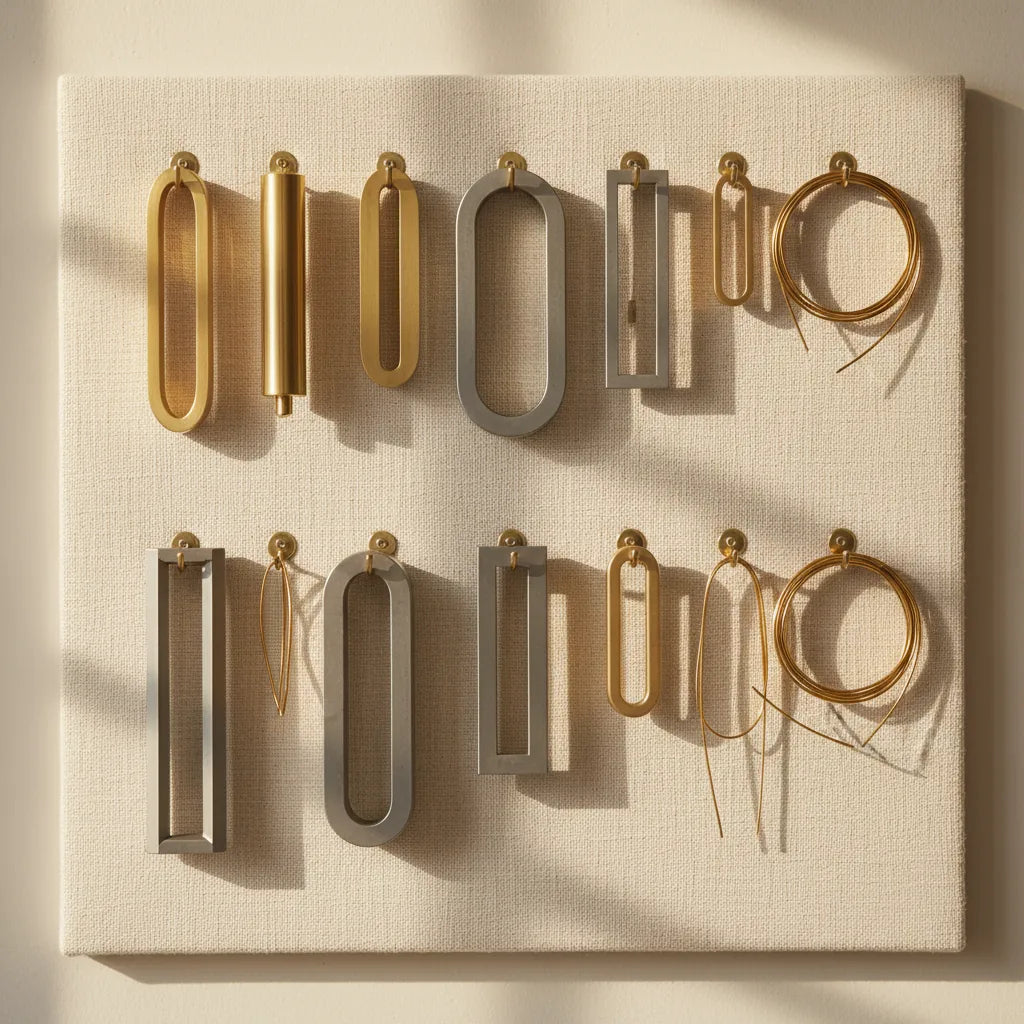
- Oval Mandrels: These are essential for making bangles and cuffs that are more ergonomic. The human wrist isn't perfectly round, so an oval-shaped bangle often sits more comfortably. They come in both tapered and stepped varieties.
- Square/Hexagonal/Triangular Mandrels: Used for forming angular bezels or creating geometric components and bangles.
- Bezel Mandrels: These are typically small, stepped mandrels with a huge range of precise sizes (e.g., from 3mm to 15mm in 0.5mm increments) specifically for forming bezels for calibrated stones.
These are specialist tools you buy when a specific project demands them. But understanding they exist helps to place the initial, more fundamental choice into context.
The Verdict: Which Mandrel Should You Buy First?
After working through the pros and cons, the answer to the round vs stepped mandrel question becomes much clearer. It comes down to one thing: what are you making?
For the Ring Maker: Buy the tapered round mandrel first. It is non-negotiable. At least 80% of its utility is in sizing, forming, and perfecting rings. You simply cannot operate efficiently as a ring maker without one. Its versatility for creating other small, curved forms is a bonus. It is the single best jewellery mandrel for anyone whose work is primarily focused on the finger. For a more detailed breakdown of the options available, see our complete guide on choosing a ring mandrel.
For the Bangle and Production Specialist: If your business plan is built around bangles, cuffs, and producing large quantities of identical circular components, the stepped bracelet mandrel should be your first purchase. It provides the precision and repeatability that is essential for this kind of work. You can make a ring on a stepped mandrel if you're careful, but you can't make a truly consistent, professional-grade bangle on a tapered one.
For the All-Rounder and the Hobbyist: Start with the tapered round mandrel. It is the more versatile of the two. You can use it to form a wider variety of shapes, and it's indispensable for resizing, which is a common task even for hobbyists. You will eventually want both, but the tapered mandrel will solve more problems for you in the early days of your jewellery making journey. You'll know when you need a stepped mandrel—it will be the day you get an order for ten identical bangles and the thought of trying to make them on your tapered mandrel fills you with dread.
Ultimately, a well-equipped bench has both. They aren't really in competition with one another; they are two different tools that solve two different sets of problems. Your first purchase should be the one that solves the problems you are facing right now.
Start with the right foundation, and you can build your collection of forming tools with confidence as your skills and your business grow. You can explore our full, bench-vetted range in the Mandrels & Sizing collection.