

The first time you put a pair of brand-new side cutters through a length of memory wire, two things happen. The wire splays open like a flower under the jaw, refusing to cut cleanly. And — silently, invisibly — the cutting edge picks up two tiny nicks. From that moment on, every piece of soft silver wire you cut leaves a small chevron mark exactly where the nicks were. Your £30 cutters are now £30 paperweights.
This post is about how to not do that. Specifically: how to read the hardness of a wire before you cut it, which cutter to use for which job, and what to do when you encounter the four categories of wire that destroy cutters most often — memory wire, tempered steel, work-hardened sterling, and beading tigertail. If you've already read the bench pliers vs parallel-action guide, this is the practical companion piece.
Why this matters: cutters are sacrificial-ish
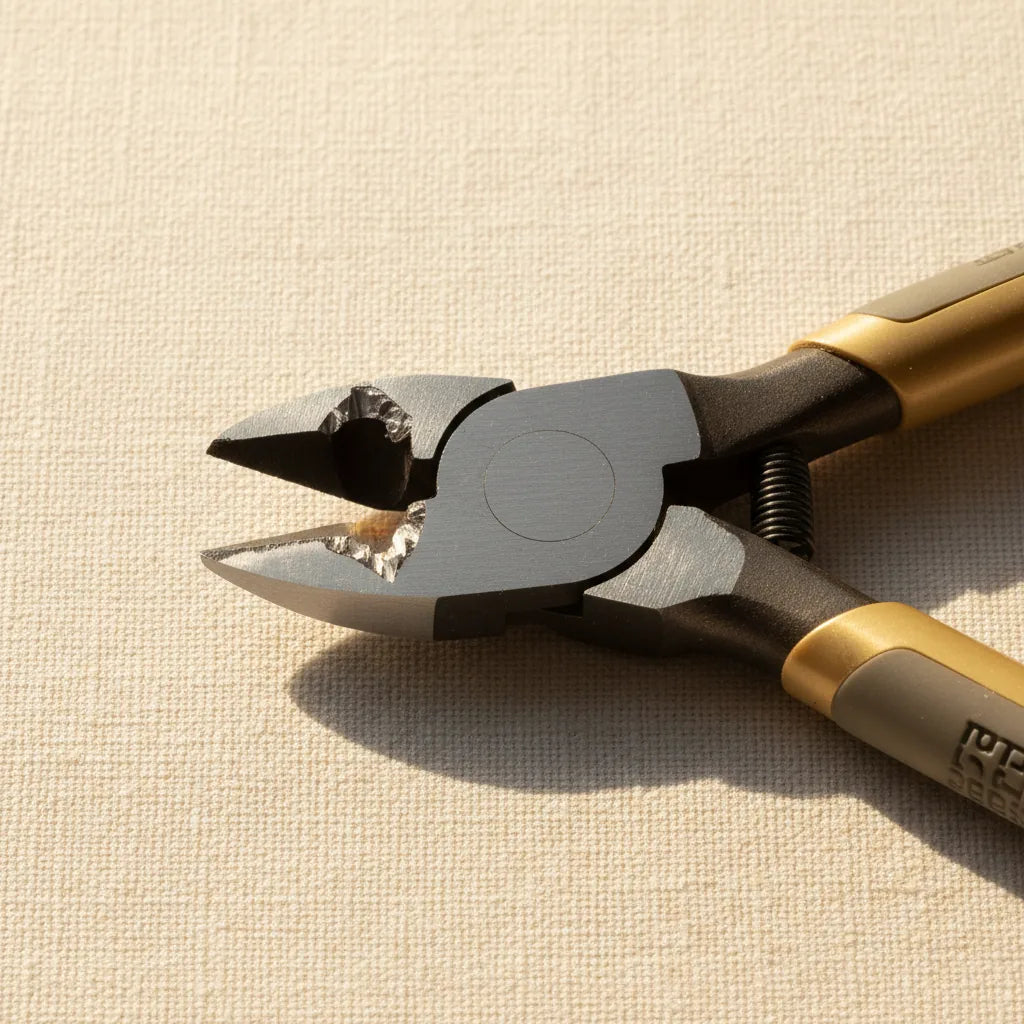
Jewellery side cutters have hardened, precision-ground cutting edges that meet at a specific bevel angle. The edges are typically Rockwell C58–60 — hard enough to cut copper, sterling silver, and most softer non-ferrous wire cleanly for years. But they're not infinitely hard. Anything in the same hardness range or higher — tempered steel, music wire, memory wire (which is heat-treated for spring memory), some "memory" beading wires (which are tigertail with a thin stainless coating) — will yield against the cutter edge rather than be sheared by it. The metal flows into the jaw nick rather than the jaw cleanly slicing through.
Each such cut leaves a small impression in the cutter blade — usually invisible until you next cut soft wire and see the chevron. After that, the cutter is permanently impaired for fine work.
This isn't a "buy expensive cutters" problem. The most expensive jewellery cutters in the world will nick if you cut hardened steel with them. It's a matching-tool-to-job problem.
The hardness ladder (and which cutter to use)
I keep three different cutters in my plier rack, dedicated to different hardness ranges. This is the framework:
Soft / dead-soft (annealed silver, copper, brass): any quality side cutter
For freshly annealed sterling, copper sheet metal trim, dead-soft beading wire — any quality jewellery side cutter works perfectly and will last decades. The polished stainless 5.5" side cutters are the standard for soft wire work in our workshop. Flush cut, mirror-edge, no concerns.
Half-hard / work-hardened sterling: heavier flush cutters
When you've hammered, forged, or drawn sterling, it's now "half-hard" — significantly harder than annealed. A light cutter will struggle and leave a pinched cut. Step up to the 5" end cutters with PVC handle — end cutters are heavier, with stockier blades that handle work-hardened material cleanly.
Hard-tempered / spring / memory: dedicated memory wire cutters
This is where most cutters die. Memory wire (the coiled spring wire used for stackable bangles and chokers) is heat-treated to maintain its coil shape. It's not "wire" in the soft sense — it's a sprung steel section. Trying to cut it with a normal side cutter is what causes most plier-jaw chipping.
The right tool is a dedicated memory wire cutter 120 mm — the cutter has a different jaw geometry, designed to crush-shear hard wire rather than slice it. The cut won't be flush (memory wire ends always need finishing), but the cutter survives. Always use the right tool here. A memory wire cutter is a £15 insurance policy on every other cutter you own.
Steel beading wire / tigertail / coated wire
This is the sneaky one. Tigertail looks like a normal beading wire but it's actually thin strands of stainless steel cable inside a nylon coating. The steel core will chip jewellery cutters as fast as memory wire will. Either use the dedicated memory wire cutters, or buy a cheap pair of diagonal cutters specifically for steel wire — the economy diagonal side cutters 5" slim line is the right level of "I don't care if these die" for this exact use case.
The flush-cut technique
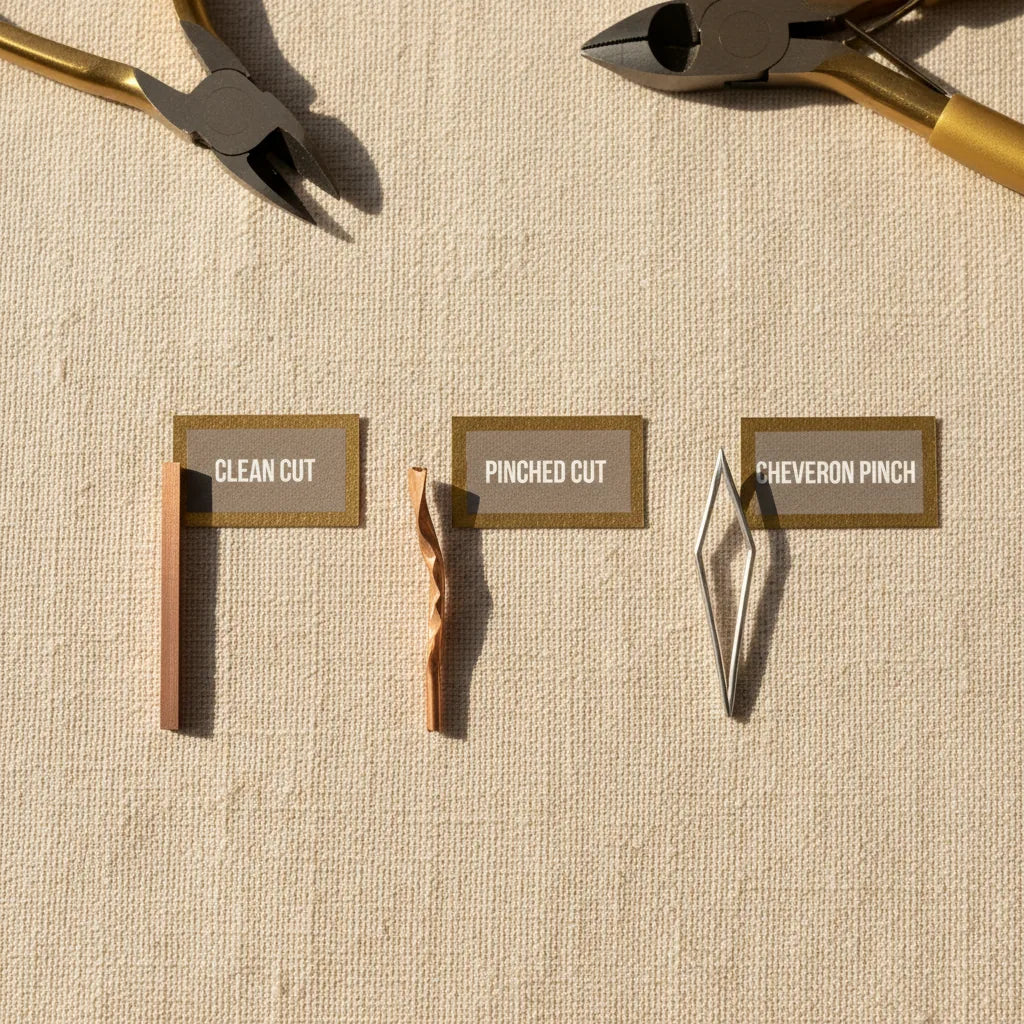
The flush side of a side cutter is the side that meets the wire square — leaving a flat, mark-free end. The other side leaves a small pinch ("chevron"). For finished pieces — ear wire ends, head pin tops, anywhere the cut shows in the final work — the flush side must point at the keeper piece (the part you're keeping) and the chevron-pinched waste falls off as the offcut.
Practically: hold the wire with the flush jaw face toward the work. Make the cut. The offcut falls away with the pinch on it; your keeper piece has a clean square end.
Common mistake: flipping the cutters around mid-cut so you can see better. Now the chevron is on the keeper side, and you'll spend three minutes filing the pinch flat. Stay oriented with the flush side toward the work even when it makes the visibility slightly worse. Your fingers learn to do this by feel after maybe 50 cuts.
Cutting at the angle
For most cuts, hold the cutters perpendicular to the wire. The cutting edges grip on both sides and shear cleanly.
For ear wires and head pins where you want an ultra-clean square end, hold the cutters perpendicular and push slightly against the wire as you close them. This forces the wire deeper into the jaw bite, eliminating the small chevron pinch and giving a near-perfect flush cut. Test on a piece of scrap copper first — too much pressure crushes the wire instead of cutting it. The British Goldsmiths' technical training notes refer to this as "loaded cutting" and recommend it specifically for finished wire ends.
For thick stock (1.5 mm+ sterling), don't try to cut all the way through in one squeeze. Score from one side, rotate 90°, score from the next, rotate again. You'll get a clean four-cut break with no jaw stress.
Jump rings: a special case
Cutting jump rings from a coil presents two unique problems: you want a flush cut on both sides (so the ring closes invisibly), and the cuts have to be parallel to each other.
The right tool is the coil-cutting and jump-ring-making pliers — the jaws have a slot that holds the coil wire perfectly perpendicular as you cut. Both faces of the cut come out flush, the ring closes invisibly, and you don't need to file the ends. For volume work this is a no-brainer purchase.
Without one, the workaround is to use a fine jeweller's saw (jewellery saw blade through a coil wrapped on a mandrel). Slower but works.
Maintenance: when to retire a cutter
A jewellery side cutter is alive while:
- The edges meet cleanly with no visible gap when fully closed
- The cut produces a flat (not pinched) face on the flush side
- The cut wire end is not splayed open
It's dying when:
- You see two tiny chevron marks on every flush-cut end (jaw has a nick)
- The cut leaves a "double-line" mark — the jaws are no longer aligned
- The springs feel slack and the cutter doesn't open by itself
A nicked cutter isn't repairable at a bench (the cutting bevel is precision-ground and re-grinding loses the geometry). Demote it to your "any wire including the bad stuff" cutter for steel and memory wire work, and buy a fresh pair for soft work.
Storage: keep cutters dry. Steel cutters in a humid bench drawer will rust at the cutting edge — invisible, then suddenly the wire end has rust transfer marks. Wipe the cutting edges with a smear of light oil monthly if your workshop has humidity issues.
The four categories of wire I'd recommend you keep separate cutters for
-
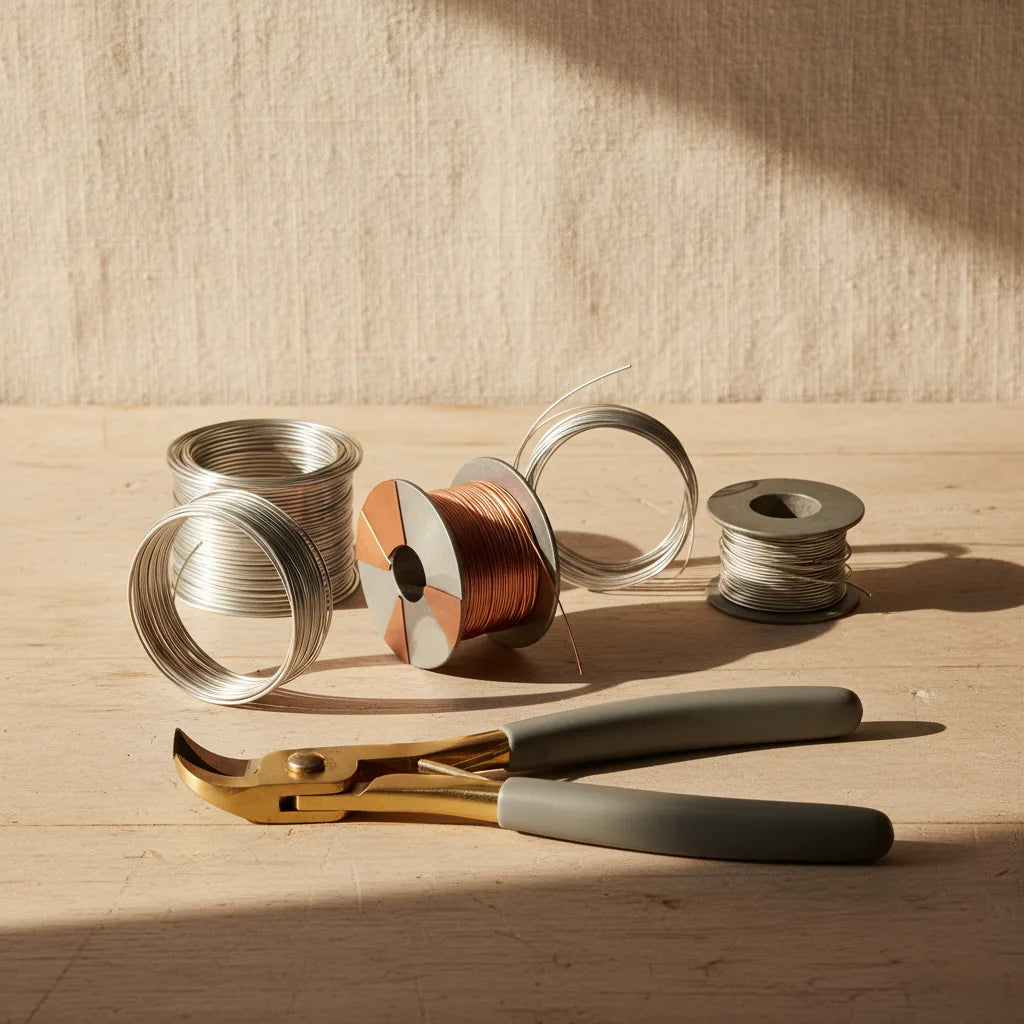
Soft / annealed precious metal wire (sterling, copper, brass, gold-filled). Your good cutters live here. Don't dilute them with anything else.
-
Work-hardened / half-hard precious metal. Either your good cutters (if you're occasional) or a dedicated second pair of heavier end cutters (if you do a lot of forging).
-
Memory wire / spring steel / piano wire. Dedicated memory wire cutter. Never substitute.
-
Tigertail / coated steel beading wire. A cheap diagonal cutter that you don't mind degrading. Never your good ones.
If you can only afford one cutter to start: get the good flush cutter for category 1, and a memory wire cutter as soon as you start doing any beading work. £35 total. Buy the dedicated cutter for steel beading wire whenever your first jewellery side cutter starts showing chevrons — that's the warning sign you needed it months ago.
Frequently asked
Can I re-sharpen jewellery side cutters?
Practically, no. The cutting bevel is precision-ground at a specific angle, and re-grinding by hand will lose the geometry and leave you with cutters that crush rather than slice. There are professional re-grinding services — but at the cost of professional re-grinding, you're usually better off buying new cutters.
Why does my cut leave a "chevron" point even though the cutter is new?
That's normal — it's the non-flush side of the cut. Position the flush side of the cutter toward the keeper piece and the chevron falls off with the offcut. Every flush cutter cuts this way; you just need to orient correctly.
Are flush cutters and side cutters the same thing?
"Side cutter" describes the geometry (jaws on the side, perpendicular to the handles). "Flush cutter" describes the bevel design (one side of the cut is flat). Most jewellery side cutters are flush cutters, but cheap diagonal cutters (the ones used by electricians) are not flush — they pinch both sides equally. For jewellery, you want flush.
Can I use a Dremel cut-off wheel instead of a cutter?
For thick wire and bar stock, yes — a Dremel with a fine reinforced cut-off wheel cuts through 2 mm+ silver cleanly and doesn't dull the way a hand cutter does. Wear safety glasses and a dust mask. For thin wire this is overkill — a flush cutter is faster and gives a cleaner end.
How long should a good pair of jewellery cutters last?
With dedicated use (soft wire only, dry storage, no abuse), 10+ years of weekly use is normal. With abuse (cutting steel, beading wire, memory wire), the cutting edge can be compromised in a single cut.
Where to go next
Pair this with Bench pliers vs parallel-action pliers for the full plier-side picture. Then think about wire choice — what hardness you actually need for the work you're doing. Half-hard sterling cuts and holds shape better than dead-soft for ear wires; dead-soft is what you want for wrapping and forming. Match the wire to the job, and the cutter problem solves itself.
Browse the Pliers & Cutters collection when you're ready to commit to the right set.
— K.